Managed IT services for private equity firms look different from those for a typical office. The team is small, the numbers are large and the paperwork is passed between lawyers, lenders, auditors and portfolio managers. A single deceptive email or a forgotten shared folder can matter more here than in a much bigger company.
Who needs the deal files, and when
Every deal collects an audience. The deal team sees everything from sourcing to exit. Advisers and lenders see what they need during diligence and closing. Portfolio managers see more after the deal is done.
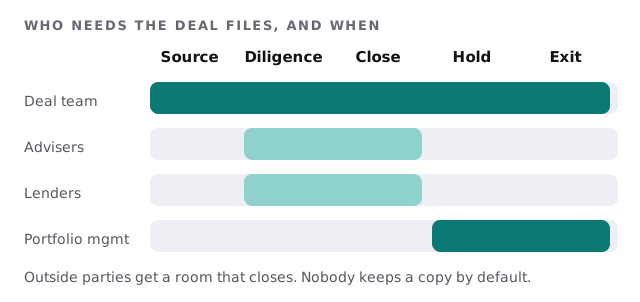
A deal room with named users does most of the work: view-only where possible, a record of who opened what and an end date set on day one. The alternative is a document attached to an email, which stays in every inbox it reached.
Money moves on instructions
Private equity is a target for payment fraud, because the amounts are big and the instructions travel by email. Three rules, written down and followed every time, do more than any tool:
- No change to payment details by email alone. A new account number is unverified until someone calls a known number.
- Two people for every release. The person who prepares the payment is not the person who approves it.
- A pause on urgent requests. Pressure to hurry is part of the trick.
Technology supports the rules. Multi-factor sign-in stops a stolen password from reading the thread, mail filtering flags look-alike domains and an admin can see when an unexpected forwarding rule appears on a partner’s mailbox.
Portfolio reporting without the chase
Each portfolio company sends numbers in its own format, on its own schedule, from its own systems.
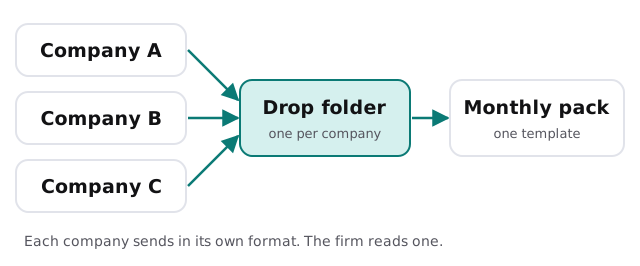
A drop folder per company, access limited to that company and the relevant partner, and a shared template for the monthly pack turn a scramble into a routine. Keep the receiving side tidy: the same folder structure for every company, the same naming and a rule for how long old packs are kept.
Rules that may apply to you
If your firm, or its adviser, is registered with the SEC, Regulation S-P requires written policies and procedures for administrative, technical and physical safeguards for customer information, and the amended rule adds a response program that includes notifying affected customers within a set period. Which parts reach your firm depends on who your customers are, since many funds’ clients are other funds, and on the dates each part took effect. That is a conversation for your counsel. We never state that a firm is compliant. What we can do is document the systems, set up the access controls and backups that such policies refer to, and keep the records straight.
Partners on the road
Dealmakers travel with laptops and phones holding documents that would end a negotiation if they leaked. Make sure each device is encrypted, locks itself and can be wiped. Keep travel from changing how things work: the same sign-in, the same deal room and no forwarding to a personal address because the hotel Wi-Fi was slow.
Small team, many hats
An office manager or chief of staff often serves as the IT contact. We take over the regular work, such as accounts, updates and backups, and give that person a short list of who to call for what. Joiners, leavers and the quarterly access review all follow the same checklist, and the shared mailbox for investor relations gets the same care as any partner’s.
What we need from you
- Your list of systems, and who administers each.
- Your current deal-room and file-sharing habits.
- How payments are approved, in your own words.
- Which regulator or counsel governs your policies.
Monthly care covers access controls, backups and updates. The free IT check ends in a plan and a fixed quote.
When the team is small, one convincing email can do the damage of a large breach. Make the second check a habit.