Managed IT services for med spas begin in the treatment room. A client lies down, a clinician photographs the area, a charting tablet records the details and, an hour later, someone asks whether the picture can go on Instagram. Where that picture is stored, who can see it and what the client signed are IT questions as much as marketing ones.
First, which rules apply to you?
Health-privacy rules do not attach to every business with a treatment room. Under the HIPAA definitions, a covered entity includes a health care provider who transmits health information electronically in connection with the standard transactions the rules cover, such as billing a health plan. A practice that bills insurance sits in a different place from one that takes only direct payment. Which one you are is a question for your counsel. We can explain what the rule asks of a covered entity, but we don’t tell you that you are or aren’t one, and we never claim a tool makes you compliant.
Even outside the rule, client photos and records deserve the same care. A leak is a trust problem whatever the law says.
Before-and-after photos
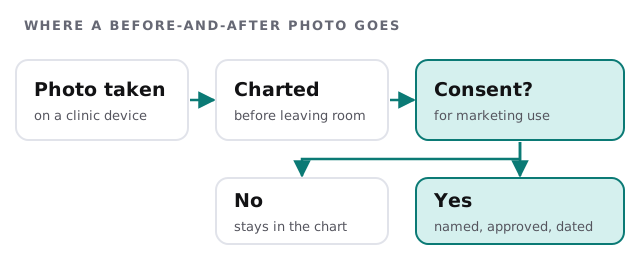
Three habits keep this clean:
- One device, one destination. Photos taken on a clinic device go straight to the client record.
- Consent recorded per use. Social media, website and advertising are separate permissions.
- A deletion routine. Personal phones and shared tablets don’t keep a camera roll of faces.
Room by room
A med spa is small enough to walk through in ten minutes, which is exactly how we begin.
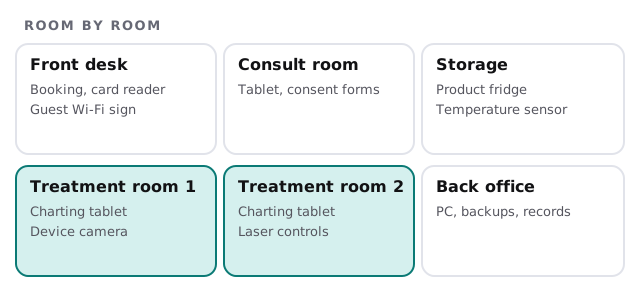
Treatment-room tablets should lock quickly, carry no personal accounts and update on a schedule. Device controls for lasers and similar equipment often come with their own software and vendor support. Keep that vendor’s number with the equipment, and don’t update the control computer without asking them. The product fridge deserves a sensor that alerts someone’s phone, because a failed fridge is a loss you notice the next morning.
Here is how a good Saturday looks. The front desk checks a client in, the tablet in room one opens her chart with last month’s photos beside today’s, and the clinician records the visit without leaving the room. The photo is saved in the chart, not on the phone in a pocket. The desk charges the membership and sends the receipt. At closing, nobody has to forward anything to themselves to finish the paperwork at home.
Memberships, packages and gift cards
Recurring plans are the backbone of many med spa businesses. They live in booking or membership software, connected to a payment provider. The IT work is plain but important:
- Name who can issue refunds, and keep that list short.
- Name who can edit a plan, pause a membership or apply a credit.
- Check the connection between booking and payments after every software update.
- Close accounts the day staff leave, including the marketing and booking tools.
Your marketing accounts are part of IT
Many med spas run Instagram, a Google business profile, an ad account and an email tool. Each is a login, and a new hire or a departing one changes who holds it. Keep them in a password manager, use named users, and list who owns each account. If a freelancer manages your social media, they should work from their own login, not yours.
What we need from you
- A walk-through of every room and what’s plugged in.
- Your booking, charting and payment tools, and who administers each.
- How photos are taken and stored today, honestly.
- Your consent forms, current versions.
Monthly care covers access controls, backups and updates. The free IT check ends in a plan and a fixed quote.
A photo is easy to take and hard to take back. Decide where it goes before the camera comes out.