AI automation for veterinary clinics should leave the exam room alone. The veterinarian and the technician decide what is wrong, and no tool replaces that. The pressure is at the front desk and in the inbox: a phone that rings through lunch, owners asking about refills, a wave of reminders that go out the same way for every pet. We build small AI tools and internal tools for that office-side work, and a person approves what an owner sees.
Not every call is the same call
The phone line carries very different things at the same volume:
- A worried owner describing a sick pet, which needs a person immediately.
- A refill request, which needs a veterinarian’s authorization.
- A records request from a boarding facility or a new clinic.
- A question about hours, vaccine requirements or whether you see exotics.
- A reminder reply: “can we move Tuesday?”
A tool can handle the last two types from facts you provide. It can sort the second and third into queues. The first it should simply get out of the way of, by moving that message to a person as the highest priority.
Reminders that know the pet
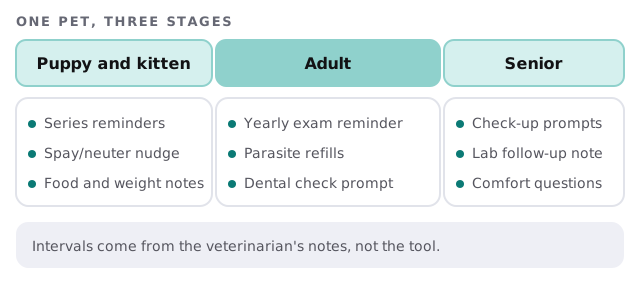
Most reminder systems fire on a date and a template. A tool that reads the patient record can vary the message by species, age and what the veterinarian noted at the last visit. It drafts, a team member glances at the batch and sends. Owners who have missed a recall get a different message than those who are simply early.
Refill requests, in a queue
- The request arrives by phone note, email or portal message.
- A tool matches it to the patient, the drug and the last visit.
- It flags what the veterinarian will want to know: time since the last exam, any recent lab work and whether the clinic’s own policy needs a visit first.
- The veterinarian approves or declines in one place.
- A drafted message goes to the owner, and the front desk sends it.
The tool does not decide the policy. It makes sure the person who does has the whole picture on one screen.
Estimates owners understand
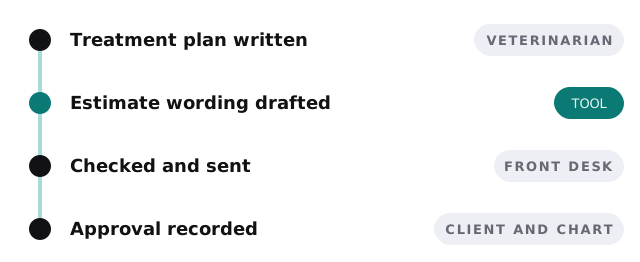
A treatment plan is full of line items and abbreviations. A tool can turn it into plain sentences for the owner, grouped by what each part is for, with the estimate attached and a place for the owner’s approval. A front desk team member reads it before it goes out.
Who gets the relief
| Role | The recurring pile | What a tool prepares |
|---|---|---|
| Veterinarian | Refill approvals, record notes | A refill queue, a tidy summary of the visit for the chart |
| Technician | Callbacks, lab follow-ups | A callback list with context |
| Receptionist | Phones, reminders, records requests | Reminder batches, drafted answers, records packets |
| Practice manager | Schedules, reviews, inventory | A weekly digest, reply drafts, a list of what ran low |
Records, referrals and results
Records requests come from new clinics, boarding facilities and insurers. A tool can assemble the right pages from your export, check the owner’s authorization is on file and queue the packet for a staff member to send. Referral notes and lab results follow the same pattern: gathered, summarized for a veterinarian to check and sent by a person.
The calendar
Clinics feel the seasons. Summer brings boarding and travel paperwork, early July brings owners worried about fireworks, spring and fall bring parasite and vaccine questions, and the holidays bring staff gaps. A tool that drafts the seasonal message, such as a heads-up before a holiday closure, saves a late night in the office.
The software around a clinic
Most clinics run practice management software with a patient record and billing, a lab and imaging connection, a pharmacy or online store, a reminder or messaging tool and a phone system. We list which of these have exports before we propose anything.
What we need from you
A week of anonymized reminders and phone notes, your refill policy and the names of your systems. After the free IT check you get a plan and a fixed quote. A real person replies within 1 business hour, Monday to Friday, 9am to 5pm Pacific. If you want a first step you can take yourself, recording and summarizing meetings with AI works for staff huddles.
Owners judge a clinic by how it treats their pet and how it treats them. The tool’s job is to give your team the time for both.