AI automation for mortgage brokers starts from a simple fact about your business: the loan file is a pile of paper that other people are late with. Borrowers send photos of statements, an employer takes a week to confirm income, and an underwriter replies with a list of conditions that reads differently than the file does. Somebody has to keep all of it moving.
We build small AI tools and internal tools that keep the pile organized. Your loan officers and processors approve what goes out.
Where the days actually go
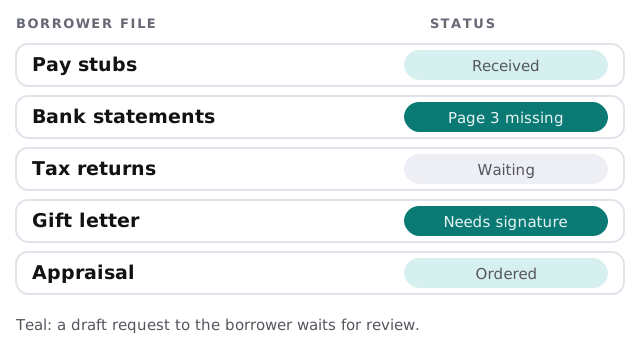
Documents are the usual culprit. A borrower uploads a bank statement with page three missing. A tool can read the upload, notice that the page count doesn’t match, and draft a request that names the account and the statement month. Your processor sends it in one click instead of typing it again for the fortieth time this quarter.
Conditions, matched
When the underwriter’s conditions come back, they are often a numbered list of requests in the lender’s own words. A tool can read the list, match each line to documents already in the file and mark the ones still open. The processor works from a short list of real gaps rather than rereading everything.
The three-day clock
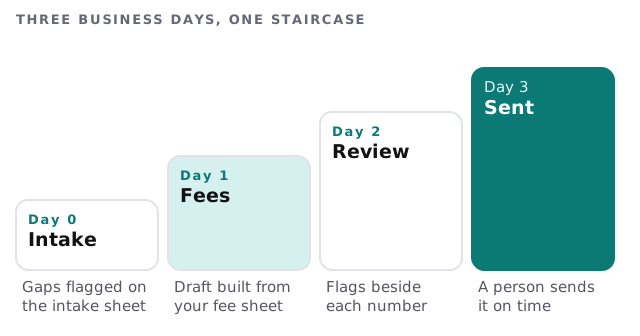
Federal rules put a timer on part of the process. Under Regulation Z, 12 CFR 1026.19(e)(1)(iii), the lender generally has to deliver or mail the Loan Estimate no later than the third business day after receiving the consumer’s application. Which firm does what depends on how your brokerage and its lenders divide the work, so we start by asking you, not by assuming.
What a tool can do is prepare for the deadline without ever taking it over:
- Intake. Check the application for the fields a loan officer would otherwise find missing on day two.
- Fees. Draft the fee lines from your own fee sheet.
- Review. Show the loan officer anything unusual, next to the number.
- Send. Remind the person responsible, with the hours remaining.
Locks, closings and the end of the month
| Pressure | What goes wrong | What a tool does |
|---|---|---|
| Rate lock expiry | A lock lapses while a condition is open | Lists every lock by days remaining, soonest first |
| Month-end funding | Files pile up near the same date | Shows which files are one document from clear |
| Purchase contract dates | The agent’s deadline isn’t in your system | Pulls dates from the contract into the file |
| Borrower silence | Nobody follows up after two days | Drafts a nudge for the processor |
The software around a brokerage
Most shops run a loan origination system, a borrower portal or point-of-sale layer, a credit reporting service, a pricing engine and a CRM for referral partners. A tool sits beside these. It reads what they allow it to and writes to them only where that’s supported and your team agrees.
A Wednesday, mid-month
The processor opens a list instead of her inbox. Two locks expire inside a week. One file is missing a single signature. A realtor has asked for a status and a draft reply is waiting, built from the file’s real stage. She approves it, sends the borrower’s signature request and moves on to the lock that matters most.
Signs it’s time
- Your processor retypes the same document request every day.
- A lock expired on a file that could have been saved.
- Agents get status updates only when they ask twice.
- You can’t say which conditions cleared this week without opening each file.
What we need from you
An anonymized example file, your fee sheet, the systems you use and how your team splits work between loan officer and processor. We return a plan and a fixed quote after the free IT check, and a real person replies within 1 business hour, Monday to Friday, 9am to 5pm Pacific. To try a first reply drafter on your own, see drafting email replies with Zapier and AI.
Borrowers remember the broker who always knew where their file was. A tool can know where every file is, and you stay the one who calls.